The Founder's Profile:
Psychologist Baraka Tumsime Mushobozi

Psychologist Baraka Tumsime Mushobozi is a specialist in the science of Counseling Psychology and currently serves as the Chief Instructor and Trainer at the University of Iringa's Psychology Facility. He is the Founder of Star of New Generation1 Company Ltd., a pioneering company offering psychological, counseling, and generational services. He is also the originator of the "Mental Health for Individual and Generations' Welfare" model, which has gained international recognition. Furthermore, he is the founder of the Psychological and Generational Interventions Facility (PGIF) in the world. Moreover, he is the founder of different counseling and psychological models.
Beyond his institutional roles, Psychologist Mushobozi actively coaches and mentors professionals and students across the globe, sharing his expertise to nurture the next generation of mental health advocates. His extensive experience spans multiple psychological settings and facilities, where he has contributed significantly to advancing mental well-being. As a designer and initiator of psychological and generational tools and interventions, he remains at the forefront of innovative mental health solutions. For inquiries or collaborations, he can be reached at barakamkemia@gmail.com or via phone at +255 767 760 660.
Introduction
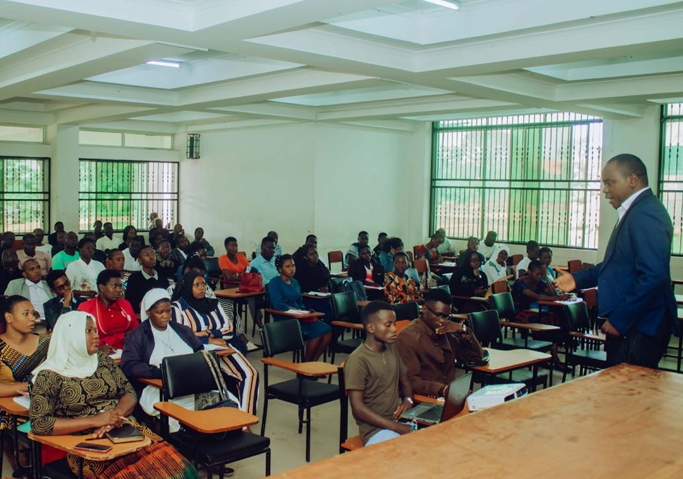
Since his time pursuing his Bachelor's and Master's degrees in Counseling Psychology at the University of Iringa, Psychologist Baraka Tumsime Mushobozi has been deeply engaged in mental health initiatives across Tanzania. Volunteering in sober houses, production sites, children's centers, and school-based mental health sensitization projects, he quickly established himself as a passionate advocate for mental well-being.
As President of the University Psychology Club, he played an active role in national mental health campaigns, developing models to raise awareness among leaders and communities about the importance of psychological services for both individual and societal welfare. Later, during his Master's studies, he was entrusted by the university to facilitate courses on crisis intervention and psychological approaches.
His professional fieldwork, particularly at the university's psychological facility and community sober houses, focused on providing counseling, psychological support, and spiritual interventions to a diverse range of clients. His outstanding service earned widespread recognition from the university and the broader community.
Through these experiences, Baraka Tumsime Mushobozi realized a profound truth:
"Mental health is not merely personal well-being — it is the bedrock of generational progress, societal stability, and global development."
He identified that many individuals' mental health struggles were deeply rooted in:
- Negative core beliefs
- Inherited negative perspectives
- Fixed mindsets
- Generationally learned abuse
- Unhealthy coping mechanisms
- Intergenerational trauma cycles
These patterns often led to health challenges, impaired abilities, underutilized talents, poor performance, and struggles in daily life. Consequently, many individuals became involved in destructive behaviors — violating laws, fostering family conflict, undermining organizations, and perpetuating societal harm.

From this understanding, the following core beliefs emerged:
- Mental health is the primary tool for individual and societal development across all domains.
- Negative intergenerational transmissions (beliefs, mindsets, trauma) are major contributors to mental health challenges.
- Breaking unhealthy generational patterns is essential for true individual and generational welfare.
- Poor mental health is the foremost enemy of personal talents and potential.
- The secret to generational welfare lies in the mental health of individuals.
- Positive inheritance — resilient perspectives, healthy coping, and growth mindsets — fosters flourishing generations.
- Global progress depends on integrating mental health priorities into generational welfare plans.
- An individual's mental health impacts not only themselves but their entire generational cycle.
- The stability of future generations hinges on the mental well-being of preceding ones.
- Psychological and Generational Intervention Facilities are vital tools for lasting welfare.
- Environmental factors significantly influence individual mental health and generational outcomes.
Driven by these insights, Psychologist Mushobozi formulated the groundbreaking model:
"Mental Health for Individual and Generations' Welfare" — alongside the establishment of specialized Psychological and Generational Interventions Facilities.
Through positive inheritance — building resilient mindsets, promoting mental health legacies, and healing generational cycles — the model envisions minimizing mental health crises while enhancing personal, familial, communal, and global stability.
The model proposes that interventions must address past, present, and future mental health challenges, investing wisely in the welfare of upcoming generations to ensure sustainable global well-being.
IMPLEMENTATION AND RECOGNITIONStar of New Generation1 Ltd., following the development of this model, collaborated with the University of Iringa's Department of Psychology to organize a national workshop. Attendees included:
- National leaders and Members of Parliament
- UNESCO representatives
- Leaders from Tanzanian Psychological Association (TAPA)
- University officials (University of Dar es Salaam and University of Iringa)
- Gender desk officers
- Professional psychologists
- Religious leaders
- Social welfare officers
- Students and psychology professionals
The workshop received high acclaim and fueled widespread interest in the model.
Since then, Star of New Generation1 Ltd. has continued to welcome students, researchers, and professionals from countries such as France, Germany, Belgium, America, Italy, Uganda, Cameroon, Congo, and many more — spreading the message of generational mental wellness worldwide.
 THE MODEL CONCEPTS
I. A Dual Focus: Individual and Generational Mental Health
Traditional mental health efforts often overlook the influence of generational cycles.
This model addresses both individual and inherited psychological patterns, focusing on inherited psychological patterns and emotional DNA.
II. Individual Mental Health: Building Psychological Resilience
Key elements include:
- Intelligence
- Cognitive flexibility for personal and professional growth
- Stress management for adaptability
- Developing psychological maturity
- Empowering self-concept
- Mindset transformation
- Promoting holistic well-being
III. Generational Mental Health: Healing Psychological Inheritance
The model focuses on inherited psychological patterns and Emotional DNA that pass across generations that originate from individuals within family, community, and society.
IV. Level of Implementation
| Level | Mental Health Strategy | Expected Outcomes |
|---|---|---|
| Individual | Psychotherapy, generational therapy, holistic care, neuropsychological education, counseling and mindset transformation | Positive mental health, legacy mindset, growth, transformed mindset, psychological maturity, psychological stability and productivity. |
| Family / Generational | Family therapies, generational therapies, intergenerational healing, emotional coaching | Healthy Emotional DNA and psychological inherited patterns that pass through generations. Breaking unhealthy inherited cycles and strengthening healthy bonds. |
| Community / Societal | Public mental health campaigns, therapy access, group interventions, cross-cultural programs | Societal welfare with triggers of effective communication, Healthy Emotional DNA and Psychological inherited pattern that pass through generations. |
| Global | Policy development, corporate wellness programs, international collaborations | Global prioritization of mental health for individual and generations' welfare. |
V. Uniqueness of the Model
The model focuses on both individual and generations' welfare. It deals with inherited psychological patterns and Emotional DNA that affects individual and generations' welfare. The model has its unique services, products, facilities, assessment tools, projects and training.
VI. Global Impact
The model has been attracting different people around the world through its unique workshops, seminars, training that involves leaders, professionals, non-professionals, interns, volunteers, institutions, etc.
Conclusion
The Model of Mental Health for Individual and Generations' Welfare offers a transformative, global framework for psychological and generational empowerment.
By integrating individual therapy, generational healing, educational outreach and global policy strategies, the world can reshape inherited perspectives, cultivate resilience and sustain mental well-being across generations.
Already embraced by diverse communities around the world, the model stands as a beacon of hope and transformation for today and for every generation to come.
